Wednesday, April 27, 2016

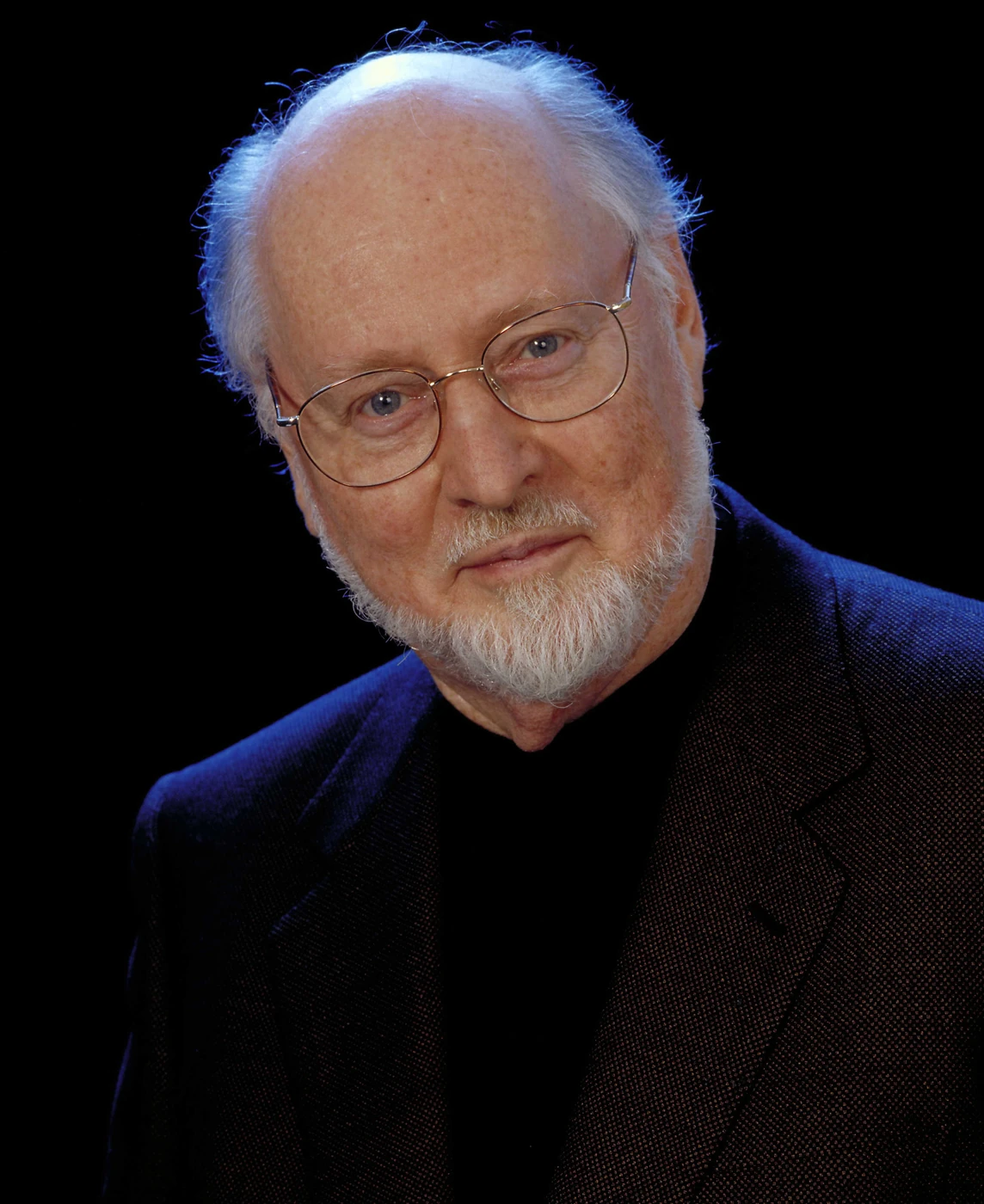
John Williams

John Williams

As one of the best known, awarded, and financially successful composers in US history, illustrating why he is "America's composer" time and again. With a massive list of awards that includes over 41 Oscar nominations (five wins), twenty-odd Gold and Platinum Records, and a slew of Emmy (two wins), Golden Globe (three wins), Grammy (18 wins), National Board of Review (including a Career Achievement Award), Saturn (six wins), and BAFTA (seven wins) citations, along with honorary doctorate degrees numbering in the teens, Williams is undoubtedly one of the most respected composers for Cinema. He's led countless national and international orchestras, most notably as the nineteenth conductor of the Boston Pops Orchestra from 1980-1993, helming three Pops tours of the US and Japan during his tenure. He currently serves as the Pop's Conductor Laureate. Of particular interests are his Essay for Strings, a jazzy Prelude & Fugue, the multimedia presentation American Journey (aka The Unfinished Journey (1999)), a Sinfonietta for Winds, a song cycle featuring poems by Rita Dove, concerti for flute, violin, clarinet, trumpet, tuba, cello, bassoon and horn, fanfares for the 1984, 1988 and 1996 Summer Olympics, the 2002 Winter Olympics, and a song co-written with Alan Bergman and Marilyn Bergman for the Special Olympics.

Born in Long Island, New York on February 8, 1932, John Towner Williams discovered music almost immediately, due in no small measure to being the son of a percussionist for CBS Radio and the Raymond Scott Quintet. After moving to Los Angeles in 1948, the young pianist and leader of his own jazz band started experimenting with arranging tunes; at age 15, he determined he was going to become a concert pianist; at 19, he premiered his first original composition, a piano sonata. He attended both UCLA and the Los Angeles City College, studying orchestration under MGM musical associate Robert Van Eps and being privately tutored by composer Mario Castelnnuono- Tedesco, until conducting for the first time during three years with the U.S. Air Force. His return to the states brought him to Julliard, where renowned piano pedagogue Madame Rosina Lhevinne helped Williams hone his performance skills. He played in jazz clubs to pay his way; still, she encouraged him to focus on composing. So it was back to L.A., with the future maestro ready to break into the Hollywood-scene.

Williams found work with the Hollywood studios as a piano player, eventually accompanying such fare. At age 24, "Johnny Williams" became a staff arranger at Columbia and then at 20th Century-Fox, orchestrating for Golden Age notables. In the field of popular music, he performed and arranged for the likes of Vic DamoneDoris Day, and Mahalia Jackson- all while courting actress/singer Barbara Ruick, who became his wife until her death in 1974. John & Barbara had three children; their daughter is now a doctor, and their two sons, Joseph Williams and Mark Towner Williams, are rock musicians.

The orchestrating gigs led to serious composing jobs for television, notably Alcoa Premiere (1961), Checkmate (1960), Gilligan's Island (1964), Lost in Space (1965), Land of the Giants (1968), and his Emmy-winning scores for Heidi (1968) and Jane Eyre(1970). Daddy-O (1958) and Because They're Young (1960) brought his original music to the big theatres, but he was soon typecast doing comedies. His efforts in the genre helped guarantee his work on William Wyler's How to Steal a Million (1966), however, a major picture that immediately led to larger projects. Of course, his arrangements continued to garner attention, and he won his first Oscar for adapting Fiddler on the Roof(1971).


In this millennium, the artist shows no interest in slowing down. His relationships with Spielberg and Lucas continue in A.I. Artificial Intelligence (2001), the remaining Star Wars prequels (2002, 2005), Minority Report (2002), Catch Me If You Can (2002), and a promised fourth Indiana Jones film. There is a more focused effort on concert works, as well, including a theme for the new Walt Disney Concert Hall and a rumored light opera. But one certain highlight is his musical magic for the world of Harry Potter (2001, 2002, 2004, etc.), which he also arranged into a concert suite geared toward teaching children about the symphony orchestra. His music remains on the whistling lips of people around the globe, in the concert halls, on the promenades, in album collections, sports arenas, and parades, and, this writer hopes, touching some place in ourselves. So keep those ears ready wherever you go, 'cause you will likely hear a bit of John Williams on your way. 


References:
http://www.johnwilliams.org/reference/biography.html http://vignette1.wikia.nocookie.net/starwars/images/4/42/John_Williams.jpg/revision/latest?cb=20120402051037

Favorite Compositions from the Top 10 Film Music Composers


My favorite compositions of the top 10 film composers

I listened to the various compositions produced by each one of the top 10 film music composers and finalized my favorite piece from each of the composers. I preferred the pieces listed below because they were the most popular and all seemed to captivate me with their leading melodies.

John Williams: Harry Potter Theme Song
A mix of wonderment, surprise and danger, John Williams did the unthinkable with the Harry Potter music -he created his sixth iconic score for a fantasy movie franchise. This theme song is very popular, as it’s associated with the well-known series of Harry Potter.

Maurice Jarre: Lawrence of Arabia
Composer Maurice Jarre's majestic score for David Lean's Lawrence of Arabia is as epic and grand as the 1962 Oscar-winning movie itself. Bombastic and hypnotic, balancing sweeping strings and brass with violent percussion, Jarre (who also conducts) holds back nothing, relying on the film's desert vistas to guide his soaring, Middle Eastern-inspired cues into the listener's head like a cannonball. 

John Barry: Dance with Wolves
Dances with Wolves is the original soundtrack of the 1990 Academy Award and Golden Globe winning film. Dances with Wolves produced, directed, and starring Kevin Costner. The original score and songs were composed and conducted by John Barry. John Barry won the 1991 Academy Award for Best Original Score and the 1992 Grammy Award for "Best Instrumental Composition Written for a Motion Picture or for Television." 
James Horner: Titanic
Titanic: Music from the Motion Picture is the soundtrack to the film of the same name composed, orchestrated and conducted by James Horner. The soundtrack was released by Sony Classical/Sony Music Soundtrax on November 18, 1997.

Elmer Bernstein: To kill a mockingbird
In contrast to the former movie's majestic sound, Bernstein's score for Mockingbird (which won a Golden Globe Award and was nominated for an Oscar) is appropriately subtle and nuanced, with most tracks featuring delicate woodwind-and-string passages. 

Danny Elfman: Mission Impossible
Music from and Inspired by the Motion Picture is the official soundtrack for 1996 film, Mission: Impossible. The soundtrack was a success, peaking at No. 16 on the Billboard 200 and spawning the top-10 hit "Theme from Mission: Impossible" by U2 members Adam Clayton and Larry Mullen, Jr..

Hans Zimmer: Pirates of the Caribbean
The score was composed by Hans Zimmer in 2006. The soundtrack is much more experimental than the soundtrack to the first film, Pirates of the Caribbean: The Curse of the Black Pearl, utilizing pipe organsmusical box and electronic beats. Although the soundtrack seems to also utilize electric guitars, Zimmer protests that no guitars were used in the score.

James Newton Howard: Batman begins
Batman Begins: Original Motion Picture Soundtrack is the soundtrack album to Christopher Nolan's 2005 film Batman Begins. It was released on June 15, 2005. The soundtrack drew from the film score, composed by Hans Zimmer and James Newton Howard, as well as contributions by Ramin DjawadiLorne Balfe and Mel Wesson.

Nino Rota: Romeo and Juliet
There's a timeless innocence to Nino Rota's theme for Franco Zeffirelli's lavish interpretation of the Shakespeare play. It's since become a by-word for romantic angst and, perhaps unfairly, has been used countless times in an ironic fashion on television and in other films to lend an overwrought or hackneyed tone. But taken on its own merits and in the context of the film, it's simple, delicate and beautiful.

Howard Shore:  Lord of the rings
The music of The Lord of the Rings film series was composed, orchestrated, conducted and produced byHoward Shore. Shore wrote many hours of music for The Lord of the Rings, 10 hours of which have been released in the Complete Recordings CD/DVD boxed sets. Additional music, including alternate and unused compositions, was released with the book The Music of the Lord of the Rings films in 2010.


References:
https://en.wikipedia.org/wiki/Music_of_The_Lord_of_the_Rings_film_series

Monday, April 25, 2016

Famous Film Music Composers

Famous film music composers

1. John Williams: As one of the best known, awarded, and financially successful composers in US history, John Williams is as easy to recall as John Philip SousaAaron Copland or Leonard Bernstein, illustrating why he is "America's composer" time and again.  Born in Long Island, New York on February 8, 1932, John Towner Williams discovered music almost immediately, due in no small measure to being the son of a percussionist for CBS Radio and the Raymond Scott Quintet. After moving to Los Angeles in 1948, the young pianist and leader of his own jazz band started experimenting with arranging tunes; at age 15, he determined he was going to become a concert pianist; at 19, he premiered his first original composition, a piano sonata.

2. Maurice Jarre: Unlike many musicians who started to learn music while still in their childhood, Maurice Jarre was already late in his teens when he discovered music and decided to make a career in that field. He enrolled at Conservatoire de Paris where he studied percussions, composition and harmonies. He also met and studied under Joseph Martenot, inventor of the Martenot Waves, an electronic keyboard that prefigured the modern synthesizer. After leaving the Conservatoire, Jarre played percussion and Martenot Waves for a while at Jean-Louis Barrault's theater. In 1950, another actor-director, Jean Vilar, asked Jarre to score his production of Kleist's 'The Princess of Homburg', the first score Jarre wrote.
3. John Barry: John Barry was born in York, England in 1933, and was the youngest of three children. His father, Jack, owned several local cinemas and by the age of fourteen, Barry was capable of running the projection box on his own - in particular, The Rialto in York. As he was brought up in a cinematic environment, he soon began to assimilate the music which accompanied the films he saw nightly to a point when, even before he'd left St. Peters school, he had decided to become a film music composer.

4. James Horner: James Horner began studying piano at the age of five, and trained at the Royal College of Music in London, England, before moving to California in the 1970s. After receiving a bachelor's degree in music at USC, he would go on to earn his master's degree at UCLA and teach music theory there. He later completed his Ph.D. in Music Composition and Theory at UCLA. Horner began scoring student films for the American Film Institute in the late 1970s, which paved the way for scoring assignments on a number of small-scale films. His first large, high- profile project was composing music for Star Trek II: The Wrath of Khan (1982), which would lead to numerous other film offers and opportunities to work with world-class performers such as the London Symphony Orchestra.

5. Elmer Bernstein: Elmer Bernstein was educated at the Walden School and New York University. He served in the US Army Air Corps in World War II. A prolific and respected film music composer, he was a protégé of Aaron Copland, who studied music with Roger Sessions and Stefan Wolpe. Bernstein worked in various artistic endeavors, including painting and the theatre and also performed as an actor and dancer. Among his early composition work were scores for United Nations radio programs and television and industrial documentaries. 

6. Danny Elfman: As Danny Elfman was growing up in the Los Angeles area, he was largely unaware of his talent for composing. It wasn't until the early 1970s that Danny and his older brother Richard Elfman started a musical troupe while in Paris; the group "Mystic Knights of Oingo-Boingo" was created for Richard's directorial debut, Forbidden Zone (1980) (now considered a cult classic by Elfman fans). The group's name went through many incarnations over the years, beginning with "The Mystic Knights of the Oingo Boingo" and eventually just Oingo Boingo. While continuing to compose eclectic, intelligent rock music for his L.A.-based band (some of which had been used in various film soundtracks, Danny formed a friendship with young director Tim Burton, who was then a fan of Oingo Boingo.

7. Hans Zimmer: German-born composer Hans Zimmer is recognized as one of Hollywood's most innovative musical talents. He featured in the music video for The Buggles' single "Video Killed the Radio Star", which became a worldwide hit and helped usher in a new era of global entertainment as the first music video to be aired on MTV (August 1, 1981). Zimmer entered the world of film music in London during a long collaboration with famed composer and mentor Stanley Myers, which included the film My Beautiful Laundrette(1985). He soon began work on several successful solo projects, including the critically acclaimed A World Apart, and during these years Zimmer pioneered the use of combining old and new musical technologies. Today, this work has earned him the reputation of being the father of integrating the electronic musical world with traditional orchestral arrangements.

8. James Newton Howard: James Newton Howard attended the University of Southern California's music school, but dropped out to tour with Elton John, and eventually compose music for film and television. He started with Head Office (1985) in 1985. He has been nominated for eight Academy Awards. He currently is a songwriter, record producer, conductor, keyboardist, and film composer.

9. Nino Rota:  Born in Milan in 1911 into a family of musicians, Nino Rota was first a student of Orefice and Pizzetti. Then, still a child, he moved to Rome where he completed his studies at the Conservatory of Santa Cecilia in 1929 with Alfredo Casella. In the meantime, he had become an 'enfant prodige', famous both as a composer and as an orchestra conductor. His first oratorio, "L'infanzia di San Giovanni Battista," was performed in Milan and Paris as early as 1923 and his lyrical comedy, "Il Principe Porcaro," was composed in 1926. From 1930 to 1932, Nino Rota lived in the USA. He won a scholarship to the Curtis Institute of Philadelphia where he attended classes in composition taught by Rosario Scalero and classes in orchestra taught by Fritz Reiner.

10. Howard Shore: Shore showed plenty of promise early in his career with moody, sinister scores on thrillers like “The Silence of the Lambs” and “Seven.” And in the early 2000s, he wrote his masterwork: The epic, magnificent score for “The Lord of the Rings.” The breadth and depth of Shore’s work on those three films holds up completely alongside the films themselves. From the melancholy strings that accompany each film’s title sequence to the bombastic brass of the battle scenes to the haunting choral vocals following Gandalf’s apparent demise, Shore’s music always perfectly suits and enhances the mood at hand. It’s no wonder he was hired back for “The Hobbit”; Middle-Earth without Shore’s music just isn’t the same, and that’s the true sign of a great score.

References: